Artificial Intelligence terms such as ChatGPT and Generative AI have made headlines and ignited wide-spread interest, drawing the interest of professionals, students, and industry leaders alike. Understanding these terms - their meaning, differences between them, significance - are more than technical exercises - they're essential to comprehending how work technology and creativity is changing for the better in future work environments.
Let's explore the many differences and connections between ChatGPT and generative AI to gain a clearer picture of how they function together, how they influence technological evolution and why these innovations will shape future technological change. This insight can also benefit anyone considering a generative AI training course to deepen their understanding.
Generative AI Is an Artistic Canvas of Technology
Generative AI refers to a broad category of AI technologies capable of producing new information--be it images text audio or even complex data models--that didn't previously exist. Think of an artist combining colors and textures when painting; similarly generative AI takes data inputs and molds them into something fresh--such as creating an original work of music from prompts or creating a painting from data inputs.
Generative AI (Generative Artificial Intelligence) has its origins in machine learning and neural networks, specifically deep learning. Generative AI systems use a range of neural architectures including variational autoencoders and GANs (Generative Adversarial Networks) to learn patterns from vast datasets; then generate content which conforms to those patterns, producing human-like results.
Imagine a workshop full of tools where each machine specializes in crafting something different: one machine may produce text, another audio and yet another images. That is what generative AI is: an accessible yet powerful tool enabling immense creativity within defined structures.
ChatGPT: The Conversational Specialist Within the Workshop
Imagine now having in your workshop ChatGPT, an artificial intelligence model specially tailored to understand and produce text-based responses, acting like an expert at language comprehension and dialogue. Careful training has enabled ChatGPT to interpret language correctly, recognize context accurately and respond in ways that make conversations feel natural.
ChatGPT developed by OpenAI is a type of "large language model", or LLM. During training it analyzed massive volumes of text to understand grammar syntax and nuance. When given a question or prompt, ChatGPT does not simply search through its database for an answer but constructs its response by selecting words which best complete input text based on patterns learned during training - thus differing significantly from traditional retrieval systems as each response generated is designed from principles it learned through training.
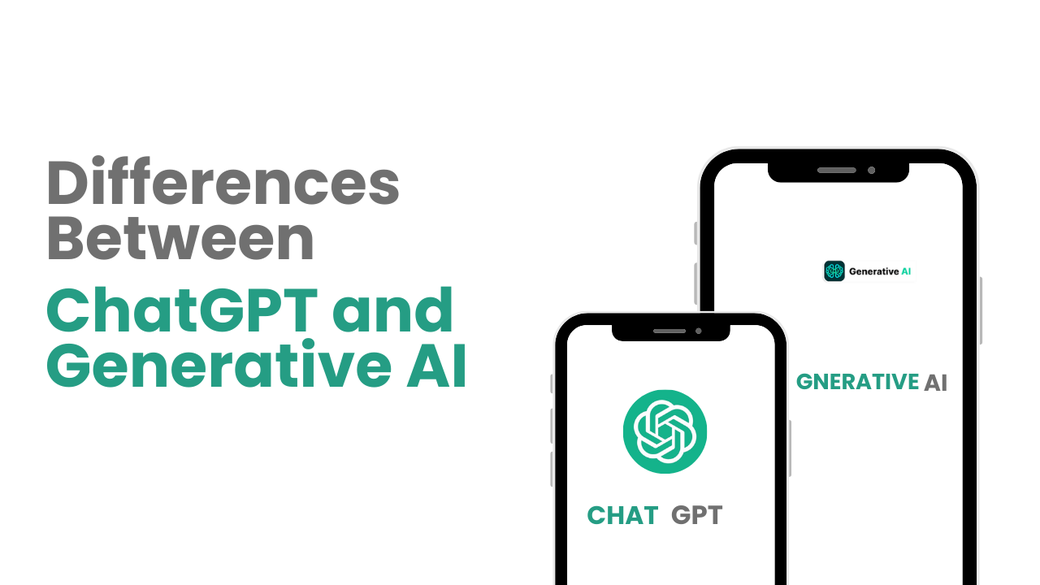
ChatGPT falls under generative AI's broad umbrella category, while ChatGPT serves as its more specific implementation--an interactive text-based communication tool optimized specifically for Chat. Think of ChatGPT as one of the more eloquent voices within that larger orchestra of AI voices.
How They Fit Together: Generative AI Orchestra and ChatGPT as its Conductor
Real-world applications of generative AI do not function in isolation; rather they comprise an orchestra of tools that work in concert to complete complex tasks. ChatGPT represents one such tool while other systems specialize in visuals, sounds or creative outputs.
Companies employing AI for customer support might rely on ChatGPT to manage conversations, answer queries and engage users lifelike. Meanwhile, other generative AI models might produce real-time visuals to guide user experience or even voice responses using synthetic voices for more personal interaction with users - creating a seamless multimodal experience--an effect of adaptable and specialized AI technologies.
Why It Matters: The Practical Impact of ChatGPT and Generative AI
Understanding the difference between ChatGPT and Generative AI is vitally important for decision-makers as this knowledge allows them to make more informed choices regarding how best to utilize these technologies to meet real world challenges. ChatGPT excels at communicating and handling dialogue which make it well suited for industries focused on customer service education and content production while Generative AI's more expansive capabilities make it more suited for creative industries design engineering simulations, among many other fields.
Understanding this distinction offers students a glimpse into AI's versatility. Learning one tool alone won't do; understanding a wide ecosystem of tools with different strengths that work together or separately depending on your task is paramount to AI success.
The Future of AI: Where Will ChatGPT and Generative AI Go Next?
Artificial intelligence will increasingly integrate across disciplines. Generative AI field has experienced growth due to multi-modal systems allowing ChatGPT AIs such as ChatGPT to connect seamlessly with other forms of generative models - imagine having ChatGPT interpret a chart, generate data-based explanations or even offer audio feedback all simultaneously - this level of interactivity and specialization will undoubtedly enhance user experiences across industries.